Transformer Buyers in SeaTac, WA
We buy used, surplus and failed transformers throughout SeaTac and King County. Send the nameplate, take a same-day number, and we handle the crane, the riggers and the truck.
| County | King County |
|---|---|
| Market | Small City |
| Ratings | 15 kVA – 100 MVA |
| Freight & rigging | Our cost |
| Payment | Upfront, before loading |
| Testing | Not required |
Selling a Transformer in SeaTac
If you have a transformer to move in SeaTac, the equipment itself is rarely the problem — the logistics are. We are a direct buyer, not a listing site or a broker: we price your unit against our own book, pay you upfront before we load, and send our own crane, riggers and heavy-haul truck to SeaTac to take it out. Ratings from 15 kVA through 100 MVA, King County and everywhere else in Washington.
Transformer supply across Washington
Utility territory in and around SeaTac is served by Puget Sound Energy, Seattle City Light, Avista, Chelan and Grant County PUDs, and the equipment those systems retire tends to be standard voltage-class distribution gear with good documentation. Beyond the utilities, Washington generates transformer turnover through aerospace manufacturing around Everett and Renton, aluminum smelting and data centers along the Columbia River, agricultural processing in the Yakima Valley, and shipbuilding and naval facilities. For freight we run I-5 and I-90 with the Ports of Seattle, Tacoma and Longview handling heavy-lift, plus Columbia River barge. One more thing worth knowing: Columbia River hydro relicensing, PUD surplus programs and the aerospace supplier base together give Washington a steady flow of both station-class and industrial units.
Rural and small-city pickups are our cost, not yours
The reason surplus transformers sit for years in places like SeaTac is that most buyers quietly expect the seller to arrange loadout, and arranging a crane and a lowboy for one unit is expensive and unfamiliar work for a plant manager or a town electrician. We remove that entirely. Our crew brings the lift equipment, the rigging gear and the trailer to SeaTac and absorbs the cost inside our offer.
Combining freight across Washington
For smaller communities we build a route rather than sending a truck for one item. If your unit can wait a short while, we will combine it with other King County and Washington pickups, which often lets us pay more than a one-off trip would justify. If it cannot wait, tell us the deadline and we will price a dedicated run.
Removal and Value
How a SeaTac removal actually runs
The sequence is consistent. You send the nameplate and a few site photographs. We return a firm number, usually the same day. On acceptance we schedule against your window and send you insurance documentation and a bill of sale in advance. Our crew arrives in SeaTac, cuts and caps conduit, breaks the unit loose from its pad or anchors, rigs and lifts it onto the trailer, and leaves the pad broom-clean with anchor bolts cut flush. Your funds go out before any of that happens — we do not load equipment we have not already paid for in full.
What sets your number in SeaTac
Five things, in roughly this order: kVA rating, voltage class, winding material, fluid and condition. A 1000 kVA 12470–480V dead-front padmount with a legible nameplate and a sound tank is a resale asset and gets priced as one. The same rating with a cracked bushing and a weeping base weld is priced closer to materials. Copper windings beat aluminum materially. Non-PCB oil beats PCB-suspect oil, because the disposal cost is real. Documented test results — oil analysis, turns ratio, power factor — raise the number because they let a downstream buyer put the unit back in service instead of rebuilding it. None of that testing is required to sell to us, though — it is upside, never a precondition.
Equipment We Buy in SeaTac
Step-Up & Step-Down Transformers
Generator step-up units, collector-substation transformers and step-down service transformers coming out of retired generation, wind and solar repowering, and industrial service upgrades.
500 kVA – 100 MVA180–240 units in inventory rotationPadmount Transformers
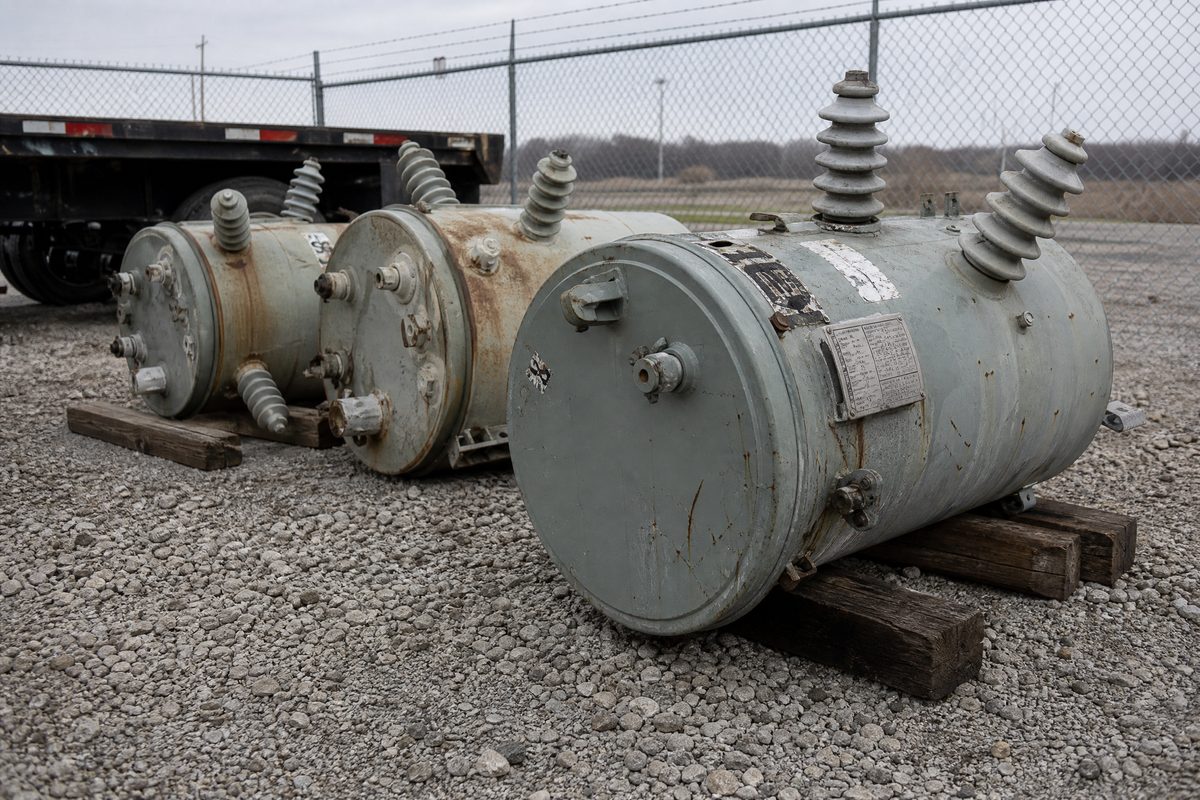
Pad-mounted distribution transformers are the single most liquid item we buy. A dead-front loop-feed unit in the 75 to 2500 kVA range with a legible nameplate and a sound tank can be priced from photographs the same day.
75 kVA – 5000 kVA300+ oil-filled units purchased annuallyOil-Filled Transformers
Liquid-filled units — mineral oil, silicone or ester — from 25 kVA pole-mounts up to 20 MVA power transformers. Oil is not a problem for us; containment, testing and disposal are part of what we do.
25 kVA – 20 MVASeaTac Questions
Is your offer contingent on anything?
Do I need to disconnect the transformer first?
Should I drain the oil before you arrive?
Do you actually pay for the freight and rigging out of SeaTac?
How fast can you get a crew to SeaTac?
Nearby Coverage
We cover the communities around SeaTac on the same terms, and we frequently combine pickups across this area into a single route.
Send the nameplate and the location in SeaTac. Firm number, usually the same business day — and the removal is included.
Transformer to move in SeaTac?
Payment upfront before loading, no testing required, freight and rigging covered.