Transformer Buyers in Philadelphia, PA
Surplus transformer purchasing for Philadelphia and the wider Philadelphia County area. Padmount through station-class, priced from the nameplate, removed entirely at our cost.
| County | Philadelphia County |
|---|---|
| Market | Major Metro |
| Ratings | 15 kVA – 100 MVA |
| Freight & rigging | Our cost |
| Payment | Upfront, before loading |
| Testing | Not required |
Selling a Transformer in Philadelphia
Selling a transformer out of Philadelphia, PA usually comes down to a date on somebody's schedule: a demolition start, an outage window, a certificate of occupancy. We work to the date. Send us the nameplate and the access conditions, take a same-day number, and we will arrive in Philadelphia County with the rigging and the truck at our expense.
Transformer supply across Pennsylvania
Utility territory in and around Philadelphia is served by PECO, PPL Electric, Duquesne Light, Met-Ed, and the equipment those systems retire tends to be standard voltage-class distribution gear with good documentation. Beyond the utilities, Pennsylvania generates transformer turnover through steel and specialty metals in the west, natural gas production and processing in the Marcellus, pharmaceutical and chemical plants in the southeast, and very large warehouse and logistics development. For freight we run I-76, I-78, I-80 and I-81 with the Ports of Philadelphia and Pittsburgh river terminals for oversize freight. One more thing worth knowing: Pennsylvania's old industrial base means a high proportion of pre-1980 oil-filled units, which we are equipped to handle including PCB testing and manifested disposal.
Volume, access and night work in a dense metro
A metro the size of Philadelphia generates transformer turnover continuously rather than seasonally — commercial retrofits, hospital and campus expansions, data center capacity refreshes, and demolition on a permanent rolling schedule. That volume is good for you: we run trucks through this market often enough that your unit rarely waits for a lane to open. The real constraint here is access, not distance. Downtown removals mean loading-dock windows, street occupancy permits, elevator and floor-loading limits, and often a night or weekend lift to avoid tying up traffic. We plan for that as standard scope and we pay for the permits.
Fleet purchases out of Philadelphia facilities
Large institutional sellers in Philadelphia rarely have one transformer; they have a list. When a refresh or a consolidation releases eight, twenty or eighty units, we price the group rather than negotiating unit by unit, and we phase pickups to match your commissioning or demolition sequence instead of demanding one clean sweep. That is usually worth more to a facilities team than the last few dollars per unit.
Removal and Value
How a Philadelphia removal actually runs
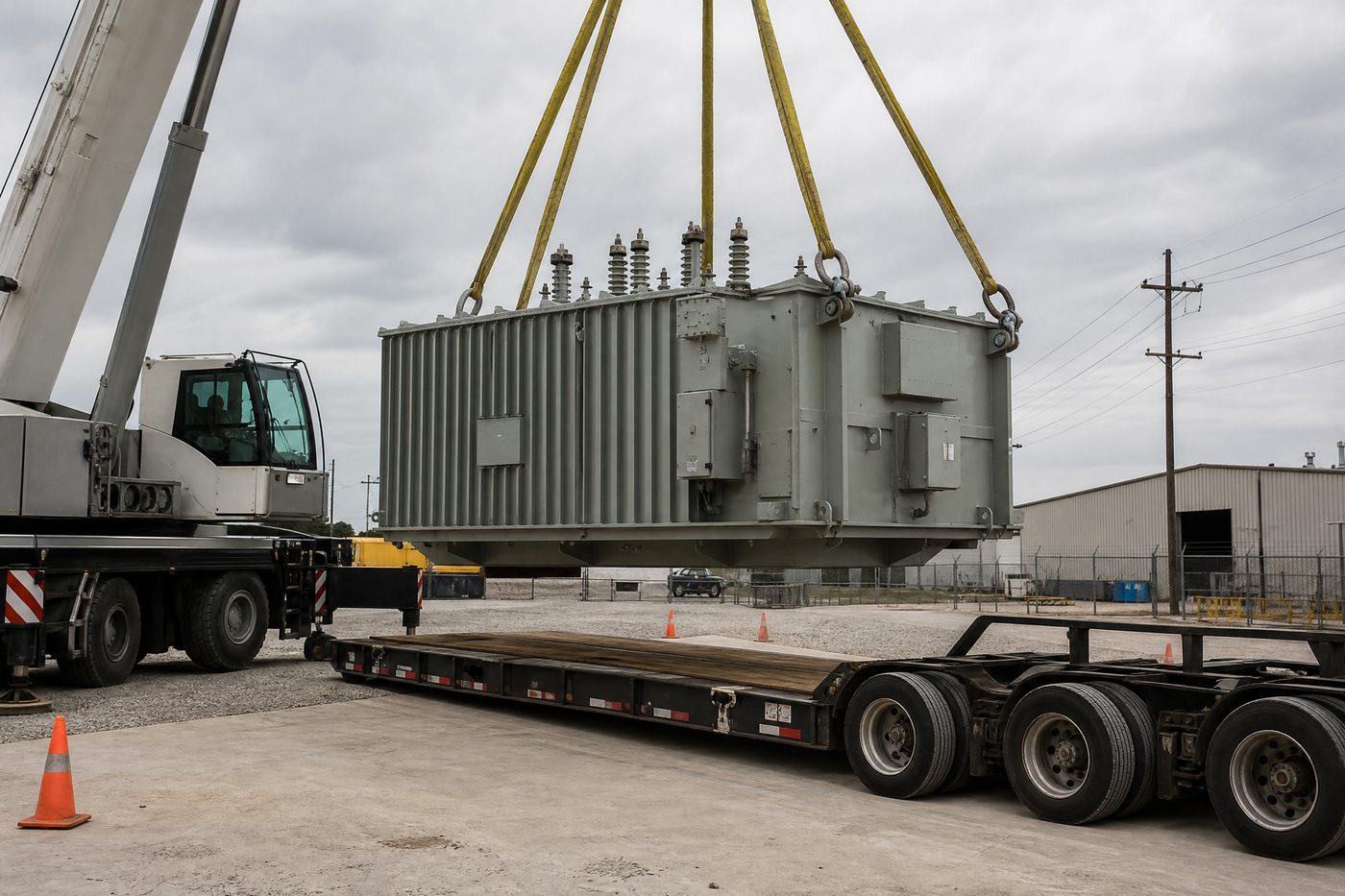
The sequence is consistent. You send the nameplate and a few site photographs. We return a firm number, usually the same day. On acceptance we schedule against your window and send you insurance documentation and a bill of sale in advance. Our crew arrives in Philadelphia, cuts and caps conduit, breaks the unit loose from its pad or anchors, rigs and lifts it onto the trailer, and leaves the pad broom-clean with anchor bolts cut flush. Your funds go out before any of that happens — we do not load equipment we have not already paid for in full.
Resale value versus scrap weight
Sellers in Philadelphia are often quoted a scrap number by a metals yard and assume that is the market. It usually is not. A serviceable transformer priced as recoverable equipment commonly brings several times its scrap weight value, because the buyer is paying for a working asset with a long lead time on the new-build alternative. Even a failed unit carries core steel, windings, a tank, a tap changer and accessories worth more assembled than shredded. We will tell you honestly which category yours falls into.
Equipment We Buy in Philadelphia
Padmount Transformers
Pad-mounted distribution transformers are the single most liquid item we buy. A dead-front loop-feed unit in the 75 to 2500 kVA range with a legible nameplate and a sound tank can be priced from photographs the same day.
75 kVA – 5000 kVA300+ oil-filled units purchased annuallyOil-Filled Transformers
Liquid-filled units — mineral oil, silicone or ester — from 25 kVA pole-mounts up to 20 MVA power transformers. Oil is not a problem for us; containment, testing and disposal are part of what we do.
25 kVA – 20 MVA120–160 dry-type units handled per yearDry-Type Transformers
Ventilated, sealed and cast-coil dry-type units from 15 kVA control transformers up to 5000 kVA unit substation sections. Copper-wound units carry a materially higher offer than aluminum.
15 kVA – 5000 kVAPhiladelphia Questions
Are you a broker?
When do I get paid?
Do I have to have the transformer tested before you will buy it?
Is your offer contingent on anything?
Do I need to disconnect the transformer first?
Nearby Coverage
We cover the communities around Philadelphia on the same terms, and we frequently combine pickups across this area into a single route.
Send the nameplate and the location in Philadelphia. Firm number, usually the same business day — and the removal is included.
Transformer to move in Philadelphia?
Payment upfront before loading, no testing required, freight and rigging covered.